Jim Martin for US Senate 2008
In 2008 Jim Martin, a Georgia State Representative, was the Democratic challenger who forced Senator Saxby Chambliss, the Republican incumbent, into a Dec. 2 runoff. The runoff was necessary as neither Chambliss nor Martin, the two major party candidates, had won a majority of the vote in the general election which was held on November 4, 2008. Jim Martin had defeated Vernon Jones in the August 5 run-off between the top two Democratic contenders.
This was the official website for Jim Martin for his Senate run.
Content is from the site's 2008 archived pages.

Supporter Abe Roth: I have been a supporter for as long as I can remember. I volunteered along with some friends to do whatever it took to get Jim into office - any office. We need people like him who are genuinely concerned about our common welfare. Long before it became a popular topic, Jim was wary of the large tech companies, especially Google and Amazon. Having seen the harm Google has done via their unregulated search, I want to support those who will look out for us. For example, the search for your name should not be a place where private information is revealed. A search for your company should not display bogus bad reviews put up by your competitors and nay sayers. Learn more about this huge problem. We clearly need a way to delete search results that are harmful. Currently, there are very few who advocate for regulation of big tech, but we are growing and the real injustice done to citizens by an unregulated monopoly must come to an end.
Fact Check: Jim Martin, The Only Candidate For Middle Class Georgians
More vicious attacks from the politician who perfected the smear campaign
Saxby Chambliss today unleashed a new vicious attack ad in the same misleading and dishonorable vein that made Chambliss a national political celebrity. The truth? Jim Martin will help President-elect Obama cut taxes for the middle class and get our economy working for Georgia again while Saxby Chambliss is committed to helping CEOs and lobbyists at the expense of average Georgians.
“Georgians want a leader like Jim Martin who knows how to cut middle class taxes, not a politician like Saxby Chambliss who only knows how to cut a slick attack ad,” Martin spokesperson Kate Hansen said. “Saxby Chambliss is running more vicious attack ads because he can’t run on his record of standing up for the special interests. Jim Martin has a history of fighting to lower middle class taxes and will go to Washington to work with Barack Obama to get our economy working for average Georgians again.”
FACT CHECK
|
Ad |
Facts |
|
I’m Saxby Chambliss and I approved this message.
Narrator:Who’s he kidding? Jim Martin has betrayed the middle class.
|
Jim Martin Committed To Helping Obama Cut Taxes For Middle Class And Get The Economy Going Again. Jim Martin said in a November 5, 2008 Press Conference, "This race is going to be about helping President-elect Barack Obama get our economy back on track and making the economy work for the middle class again. America has elected Barack Obama President, and I say now is the time for all of us to help him succeed. Let's take some time off from partisan politics - we face the biggest challenges of the past 60 years now - let's work together to solve them." [Martin For Senate, Statement on U.S. Senate Run Off, 11/5/08)] Jim Martin Voted for the "Largest Tax Cut in Georgia History"– Saving Billions for Georgia Families Since 1996. In 1996, Jim Martin voted to remove groceries from the statewide sales tax. Former Governor Zell Miller called it the "largest tax cut in Georgia history" and predicted that the savings would amount to $500 million over the final three years of his term as governor (1996-1998). At that rate, Martin's vote to eliminate the state sales tax on groceries has saved Georgia families almost $7 billion dollars since 1996. [1996, HB 265, Martin "AYE"; State of Georgia Archives, Gov. Zell Miller Accomplishments (http://www.state.ga.us/archive/governor/Accomplishments/taxcut.htm)] Saxby Chambliss Proposed Tax Increase On All Retirees and Middle Class. Retirees Would Pay Up To 50% Double-Tax Under Chambliss Plan, Poor And Middle Class Would See Tax Increase. In April of 2007, Sen. Saxby Chambliss introduced the Fair Tax Act of 2007. Fact-check organizations and editorials placed such a national sales tax at no less than 30% and closer to 50% after state sales taxes are incorporated. The so-called "fair tax" would also "negatively impact people who've saved, especially senior citizens." All retirees, who have paid taxes on a lifetime of earnings, would be double-taxed at that rate for all future purchases made from their savings. Also, according to the Washington Post, an advisory panel to President Bush's rejected the so-called "fair tax" because it would "create the largest entitlement program in history" or shift the overall tax burden from the rich to the poor. [PolitiFact.com, 1/23/08; The |
|
Then gave himself a pay raise.
|
Chambliss' Salary Has Increased 27% Since He Joined Congress. When Chambliss first got to Congress in 1994 he was paid $133,500 per year. Since then, he has accepted pay raises that have raised his yearly compensation by $35,700, or 27 percent, to $169,300. [CRS Report: Salaries of Members of Congress, 1789 – 2008] During Martin's Tenure, The Amount Allocated To His Expense Reimbursement Account Never Increased. From when Martin entered the Georgia Legislature in 1984 until he left in 2001, the amount allocated per year to each member's expense reimbursement account was $4,800 per year according to the Georgia Legislative Fiscal Office. [Georgia Legislative Fiscal Office] Martin regularly voted against directly increasing his salary as a state legislator. [HB 1264, 2/02/84; HB 78, 1/24/85; HB 1342, 2/23/88; SB 120, 2/13/86; HB 198, 1/23/90] |
|
Tried to raise property taxes 150% on every home in Georgia. |
Jim Martin Saved Georgia Families $3.3 Billion by Supporting an Increase in the Homestead Exemption. In 1999, Jim Martin voted to increase the homestead exemption to $50,000. Since 1999 Georgia families have saved more than $3.3 billion. [1999, HB 553, Martin "AYE", Associated Press, 5/27/02] Jim Martin Authored Homestead Exemption Tax. In 1992, Martin authored the Homestead Exemption, which went on to become law. It raised the Homestead Exemption in Fulton County to $15,000. This bill had the effect of dramatically lowering property tax obligation, provided added protection in bankruptcy, and allowed surviving spouses to stay in their homes by limiting the number of forced estate sales. [1992, HB 1542] |
|
And now we find a document where Martin proposes raising income taxes on every Raises your taxes, raises his pay. You can’t trust Jim Martin.
|
Jim Martin Voted for the "Largest Tax Cut in Georgia History" – Saving Billions for Georgia Families Since 1996. In 1996 Jim Martin voted to remove groceries from the statewide sales tax. Former Governor Zell Miller called it the "largest tax cut in Georgia history" and predicted that the savings would amount to $500 million over the final three years of his term as governor (1996-1998). At that rate, Martin's vote to eliminate the state sales tax on groceries has saved Georgia families almost $7 billion dollars since 1996. [1996, HB 265, Martin "AYE"; State of Georgia Archives, Gov. Zell Miller Accomplishments (http://www.state.ga.us/archive/governor/Accomplishments/taxcut.htm)] |
About
Jim Martin
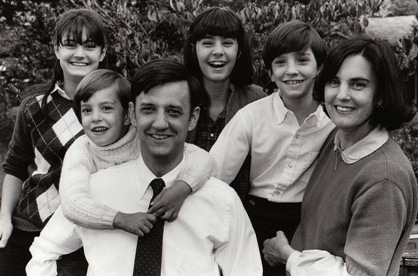
I grew up in a family of six boys - Joe, Jim, Jack, Jere, Julian, and Jeffrey.
My mother taught her six sons that we define ourselves by our deeds, not by our words - by living the values that come from our faith.
My father, who was as proud of this state as he was of his family, instilled in each of us the sense that Georgia is a special place. On Sundays, he would drive us around the state, telling us stories about the landmarks along the way, like the building where our grandfather operated the Linotype machine for Joel Chandler Harris, the editor of The Atlanta Constitution.
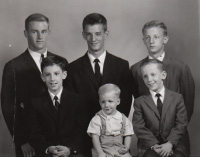
My brothers have always been my best friends. When I was eight years old, I contracted polio. My parents had to isolate me from my brothers and take me out of school for fear that I would infect others. For months, I was confined to my bedroom, visited only by my parents and my doctors. I recovered, but some things in life you never forget.
I will never forget what it feels like to need a little help. A government founded on solid principles does not turn its back on children, seniors, or people with disabilities.
After attending the Atlanta Public Schools, I enrolled at the University of Georgia. On December 4, 1963, I was elected freshman class president. That same day, Vince Dooley was named head football coach. I spent the better part of a decade in Athens, earning three degrees (a bachelor's degree and two law degrees). Interrupted only by my two years of service in the U.S. Army, including a tour of duty in Vietnam, I have spent my entire life in Georgia.
I will never forget the lessons I learned serving in Vietnam. I came away from my tour of duty understanding the importance of personal responsibility as well as the importance of working together towards a common objective.

I have been married to Joan for 38 years, and we have four children and three grandchildren. Joan and I had our first child, our daughter Morgan, while I was stationed at Fort Meade in Maryland. Two months later, I was called to serve in Vietnam. The kind of sacrifice that Joan made in caring for our daughter alone is the kind that many Georgia families are experiencing right now.
The Bush administration's failure to provide adequate care for our returning soldiers and their families is nothing short of disgraceful.
As a young legal aid lawyer a few years out of the Army, I saw first-hand how the deck is stacked against working people under the Gold Dome in Atlanta. Most of the folks in the halls of the Capitol had powerful clients with deep pockets. My clients were like most Georgians, folks who work hard and just want a fair shake.
I believe we need to stand up for what is right even when it is not easy.
In 1983, after years on the outside, I was elected to the Georgia House of Representatives. During my 18 years in the legislature, I became a leader on health care issues and helped to create PeachCare, which provides quality and affordable health care to thousands of Georgia's children.

I served as chairman of a number of committees in the House, including the Judiciary Committee, the Ethics Committee, and a subcommittee of the Appropriations Committee overseeing state health care programs. I also served as an active member of the Industrial Relations, Special Judiciary, and Children and Youth Committees.
When the state faced tough economic times in the early 1990s, state leaders turned to me to preserve critical services for seniors, children, and people with disabilities, while making necessary cuts in the budget. Ultimately we cut millions of dollars, but we never turned our backs on the least among us - I made sure of it.
Over the years, I have learned how to get things done for Georgians.
That is why two governors, one a Democrat and the other a Republican, entrusted me to lead the Georgia Department of Human Resources. I took over the department two weeks after 9/11, when the state was facing the most difficult economic times in recent memory. Many of my friends and colleagues told me not to do it, not to take the job. They said, "Jim, this is political suicide. The problems are too big and the resources are too limited." I took the job anyway, because I wanted to make a difference. I successfully cut spending while preserving important programs.
In 2006, I ran as the Democratic nominee for lieutenant governor. In a tough environment for Democrats, I won more votes than any other non-incumbent Democrat on the ticket. I was one of the few candidates anywhere in the country to address the looming foreclosure crisis, which has shaken our nation's economy and which threatens homeowners across Georgia today.
I'm running for U.S. Senate because I understand the toll the failed policies of George W. Bush and Dick Cheney have taken on Georgia families, and I can help to put our country back on track.
As an elder in my church, as a proud father and grandfather, and as a Vietnam War veteran, I have tried to live the values of faith, family, and patriotism. No one is going to take those values away from me, and no one in the race for U.S. Senate shares your values more than I do.
Joan Martin

I am my husband's biggest fan.
I have known Jimmy Martin for over 39 years. I have watched as he listened to and helped people find solutions to difficult issues; as he successfully passed legislation; and, most importantly, as he treated colleagues, advocates, adversaries, and others with unending respect.
Why do I call him Jimmy? It is the name his family has called him his whole life, a name that reminds me that his strength, compassion, and concern for others was formed many years ago in his childhood.
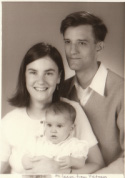
I met Jimmy in 1968 through my Hollins College roommate. We were married in January of 1970, as Jimmy moved from Fort Knox, Kentucky to Fort Bliss, Texas before serving in Vietnam. While Jimmy was in Vietnam, I lived in California with our daughter Morgan. When Jimmy returned, we moved back to Georgia where Becky, Jay, and Frank were born.
As a mother, I believe in keeping family first. I have juggled family, career, and community service by searching for and creating career opportunities that were flexible. I have two master's degrees from Georgia State University, one in accounting and one in community counseling.
I worked as an accounting instructor at DeKalb College (now Perimeter College); as Director of Finance for the National Faculty, a national teacher training organization; then as a counselor at the Fayette and Henry County Community Counseling Centers until I became Executive Director of the Georgia Association of Criminal Defense Lawyers in 1989. I retired from the Association in 2003.
My community service includes active involvement in Christians Against Hunger, the Fulton County Court Appointed Special Advocates, and the Genesis Community Congregation. Additionally, I was the first Executive Director of the Henry W. Grady High School Foundation and served as Co-Chair with Jimmy of the Atlanta Fulton Family Connection.
Issues
Growing Together with a Strong Economy/images

- We should lower taxes on middle class Americans while maintaining fiscal discipline.
- We need strong consumer protection laws to protect hard-working Americans from politically powerful special interests like credit card companies, insurance companies, banks, and oil companies.
- Economic policy must encourage research and innovation, including "green-collar" job initiatives, in order to fuel future economic growth.
- We have to rein in the federal budget and put an end to corporate welfare.
A Long Term Strategy for Iraq/images

Image used under a Creative Commons license from Soldiers Media Center
- We cannot continue the Bush Administration's failed Iraq policy, which has us spending $10 billion each month while there are serious needs here at home.
- It's time for the Iraqi government to start taking responsibility for its own country.
- It's time to start bringing our troops home. The tactical decisions about how to do so and on what timetable have to be made by our military commanders on the ground.
- Once that happens, we can begin to redeploy our forces in a way that effectively addresses the threat of international terrorism.
- We must have a military presence in the Middle East that is sustainable and that protects our national security interests. And our military strategy must include a robust diplomatic component and have meaningful support from our allies abroad.
- We have to do a better job of taking care of our troops when they return home.
Health Care for Every American/images

Image used under a Creative Commons license from Paul Keleher
- Accessible and affordable health care for all Americans is an achievable goal.
- Solving the national health care crisis will also spur economic growth.
- Health care for all children should be our first priority.
Education: Transforming Our Workforce/images

- We need an education system that helps to prepare Georgians for the kinds of high-paying jobs that will be available in the 21st Century's global economy.
- Control of public education rests with state governments and local school boards, but there is a role for the federal government in helping states and local school systems to address the problems they face.
- The federal government can help the most by providing early childhood education for children who need help, by helping school systems achieve excellence, by assisting children with special needs, and by supporting struggling school systems.
- No Child Left Behind focuses too much on micromanaging teachers and students - we need to assist parents and teachers and provide the funding needed for excellence.
- The federal government should expand loan and grant programs that allow students - especially first generation prospective students - to attend college and technical schools.
Safeguarding Our Environment with a Green Economy/images

- We must reduce our greenhouse gas emissions and lead the effort to address global climate change.
- The pursuit of new "green" technologies is good for the economy and good for the environment.
- The energy policies of the past are not sustainable and are keeping us from developing new and better energy resources.
- We must insist on rational sustainable growth in the development of our communities.
- The federal government has an important role in easing Georgia's water crisis.
Protecting Seniors and Retirement Programs/images

Image used under a Creative Commons license from kthypryn/images
- We must stop using the Social Security trust fund to pay for Washington's pork-barrel spending.
- The federal government has an important role to play in negotiating with drug companies to lower prescription drug costs for seniors.
- We must safeguard workers' retirement savings and also protect seniors from consumer fraud.
- We must increase funding to fight degenerative diseases such as Alzheimer's and Parkinson's.
- We must support families who are caring for older family members.
Immigration Reform That Will Make the System Work and Protect Our Nation/images

Image used under a Creative Commons license from Omar Omar
- There are two things we need to do immediately: first, we must secure our borders, and second, we have to crack down on employers who hire undocumented workers. Once we do these two things, we can then move to address the need for real and comprehensive immigration reform.
- We need immigration reform that is practical and fair, and that reflects the realities of our economic needs.
- Hard-working immigrants with no criminal records and basic English skills should be allowed to get in line for the opportunity to gain legalized status after paying a fine and back taxes.
- We can curb immigration by supporting other countries in their efforts to become more stable and economically sound.
Honoring Our Country's Soldiers and Veterans/images

Image used under a Creative Commons license from Tom Adamson/images
- We should support our troops by using them more effectively and taking care of them when they come home.
- The Department of Veterans Affairs must be adequately funded in order to provide proper care for our veterans.
- We need to make it easier for veterans to understand and receive the benefits to which they are entitled.
- We must address the mental health needs of returning soldiers and their families.
- Returning soldiers must receive the support they require in order to transition back to civilian life and find meaningful employment.
- Congress was right to pass the 21st Century GI Bill, which seeks to provide today's veterans with the same opportunities soldiers returning from World War II had.
- Our country should expand benefits to reserve and National Guard personnel in order to reflect the expansion of their role in our military operations.
Your Thoughts on the Issues/images
We also want to hear from you. Folks are fed up with Washington in part because politicians spend more time talking than listening.
In his more than 35 years in public service, Jim has built a reputation for listening first, doing his homework, and working with everyone in order to get things done for Georgians. He would like nothing more than to hear from you.
Please feel free to send Jim an e-mail - info@martinforsenate.com - or drop us a comment on this thread.
Press Releases
Chambliss Allies Continue Desperate, False Attacks
Martin has come face-to-face with violent crime, spent career protecting children
ATLANTA – In a new ad released today, Saxby Chambliss’ allies attack with more of the same smears already disproven by nonpartisan FactCheck.org. The truth is that Jim Martin has always fought to protect children and families, because he knows what it’s like to have a child come face-to-face with violent crime. That’s why the International Brotherhood of Police Officers is endorsing Jim Martin today – because he is the only candidate in the race with a proven history of proving law enforcement with the tools to keep our families safe.
“Another day, another smear from Saxby Chambliss and his allies,” Martin for Senate spokesperson Kate Hansen said. “If Saxby Chambliss had spent more time fighting for Georgia families and less time fighting for corporate interests, maybe he wouldn’t be forced to resort to these desperate attacks. Georgians know that Jim Martin always stands up to protect Georgia families because he knows what it’s like to come face-to-face with violent crime.”
Martin’s daughter Becky was kidnapped when she was eight years old. Fortunately she was let go, but Martin never forgot the way Becky trembled when she came face-to-face with her kidnapper in court. Over his 18-year tenure in the state legislature and during his service as Commissioner of Georgia’s Department of Human Resources, Martin built a reputation as a leading advocate for children.
Jim Martin Voted for the "Largest Tax Cut in Georgia History" – Saving Billions for Georgia Families Since 1996. In 1996, Jim Martin voted to remove groceries from the statewide sales tax. Former Governor Zell Miller called it the "largest tax cut in Georgia history" and predicted that the savings would amount to $500 million over the final three years of his term as governor (1996-1998). At that rate, Martin's vote to eliminate the state sales tax on groceries has saved Georgia families almost $7 billion dollars since 1996. [1996, HB 265, Martin "AYE"; State of Georgia Archives, Gov. Zell Miller Accomplishments (http://www.state.ga.us/archive/governor/Accomplishments/taxcut.htm)]
The Cited “Largest Tax Increase In State History” Was A One-Penny Increase In Alcohol and Tobacco Taxes To Fund Schools. In 1989, the Georgia House of Representatives passed bipartisan legislation that increased the tax on alcohol and tobacco by one penny. The increase was needed in order to fund public schools. The bill was supported by two-thirds of the Georgia State House of Representatives. The net amount raised for schools was $371 million. [Georgia House Journal, p.2143-50, HB 474, 3/8/1989]
Saxby Chambliss Proposed A Tax Increase On All Retirees and Middle Class.
Retirees Would Pay Up To 50% Double-Tax Under Chambliss Plan, Poor And Middle Class Would See Tax Increase. In April of 2007, S en. Saxby Chambliss introduced the Fair Tax Act of 2007. Fact-check organizations and editorials placed such a national sales tax at no less than 30% and closer to 50% after state sales taxes are incorporated. The so-called "fair tax" would also "negatively impact people who've saved, especially senior citizens." All retirees, who have paid taxes on a lifetime of earnings, would be double-taxed at that rate for all future purchases made from their savings. Also, according to the Washington Post, an advisory panel to President Bush's rejected the so-called "fair tax" because it would "create the largest entitlement program in history" or shift the overall tax burden from the rich to the poor. [PolitiFact.com, 1/23/08 ; The Wall Street Journal, Editorial, 12/5/07; Washington Post, 12/27/07; U.S. Federal News, 4/6/07; FactCheck.org, 3/31/07 ]
Selling drugs near school is a felony and Martin supports that. Selling drugs to our kids or near them has always been a felony and it is simply false to say that Martin voted against a bill making it a felony to sell drugs near schools. [www.martinforsenate.com]
Martin Voted for Zell Miller’s “Two Strikes and You’re Out” Law – One of the Toughest Anti-Crime Laws in the Country. Martin supported Zell Miller’s two strikes and you’re out law. Martin also co-authored the law requiring criminals to pay restitution to their victims, and he passed the law that allows law enforcement agencies to use the money they seize from drug dealers to fight crime. [SB 441, 1994; HB 1165, 1998; HB 244, 1987]
Martin Voted To Make Child Solicitation A Felony. It is patently false to say that Jim did not support making child solicitation a felony. He voted for legislation to make it a felony to solicit a minor. Chambliss and his friends in Washington are just deliberately misleading people. [Georgia House Journal, pp. 1,165, 1,166-67, HB 1221, 2/17/88]
FactCheck.org: “A Tall Tale on a Selective Vote” Noting Martin Voted For Child Solicitation Bill Once Language Distinguished Whether It Was Done For Money. Factcheck.org wrote, “An NRSC ad claims Martin was "one of three to vote against making it a felony to solicit a child for prostitution." Actually, Martin eventually supported the child prostitution bill after it was rewritten. He objected to language that would have allowed willing teenagers to be prosecuted as felons for engaging in oral sex… We looked at the votes and language of both versions of the bill published in the Georgia House Journal. The Senate version stipulated that a solicitation of sodomy must be "for money" to be a felony. Other than those two words, the House and Senate versions were identical. The Senate version passed the House unanimously.” [FackCheck.org, 11/25/08]
BLOG POSTS
It's Time for the Truth, Saxby
Saxby Chambliss has returned to his tried and true tactics - the politics of division and personal destruction - in order to change the subject from who will work best with President-elect Obama to get our economy moving again for the middle class. Chambliss's attacks on Jim, which are being waged on television and through the press and which distort or simply don't tell the truth about Jim's record, are nothing but the tired old political tactics of every Chambliss campaign. Here are the facts.
* * *
Jim's Record on Taxes and Protecting the Public Purse
A RECORD OF LOWERING TAXES
Jim supported middle class tax cuts and the largest tax cut in Georgia history.
Jim has always fought for targeted tax cuts for middle class families and senior citizens. In Jim's 18 years in the state House, he supported some of the largest tax cuts in the history of the state - including the $500 million tax cut eliminating the sales tax on groceries. [HB 265, 1996] He also authored a bill to increase the homestead exemption. [HB 1542, 1992]
Saxby Chambliss and Freedom's Watch are not telling the truth - Jim voted FOR Zell Miller's $100 million tax cut in 1994.
Contrary to the claims in ads by Freedom's Watch - the shadowy front group for a Las Vegas billionaire - and the Chambliss campaign, Jim voted for Zell Miller's $100 million tax cut in 1994. The ads cite an article from the Atlanta Journal-Constitution that concerns funding for services for Georgia seniors. [Atlanta Journal-Constitution, 2/13/94] The truth is that Jim did NOT oppose the tax cut - he voted for it. [Georgia House Journal, p. 1166, HB 596]
The "largest tax increase in Georgia history" was a penny sales tax to fund schools that was supported by Zell Miller.
The vote that Saxby Chambliss and his allies call the "largest tax increase" in Georgia history was a vote for a penny sales tax to fund our schools. That's right - it raised the state sales tax by one cent in order to put badly needed money into education. The vote took place 19 years ago and was followed by the elimination of the sales tax on groceries, which Jim supported. The 1989 penny sales tax for education passed the Georgia House with 129 votes from Democrats and Republicans. [Georgia House Journal, pp. 2143-2150, HB 474, 3/8/1989; Atlanta Journal-Constitution, 10/20/08]
Saxby Chambliss and the NRSC are not telling the truth - Jim did NOT push to increase property taxes.
Ads by Saxby Chambliss and the NRSC charge that Jim tried to raise property taxes by 150%. This isn't the truth. The ads cite a bill from 1995 that sought to clarify the assessment process and make it more transparent for taxpayers. The proposal would have in no way increased property taxes - the bill went to great lengths to ensure this. Ultimately, the legislature took no action on the bill. [HB 831, 1995]
In fact, Jim saved Georgia families $3.3 billion by supporting an increase in the homestead exemption.
In 1999, Jim voted to increase the homestead exemption to $50,000. Since 1999, Georgia families have saved more than $3.3 billion in property taxes. [HB 553, 1999, Associated Press, 5/27/02]
Jim supported a bipartisan plan to reduce property taxes in Fulton County and fix crumbling infrastructure.
An ad by Freedom's Watch claims that Jim "supported a 17% Fulton County tax hike." The truth is the opposite - Jim supported a bipartisan proposal for a voter referendum on a one-percent local-option sales tax in order to reduce property taxes and repair crumbling infrastructure ahead of the 1996 Olympics. The plan was also supported by the Republican Chairman of the Fulton County Commission at the time, Mitch Skandalakis. The proposal never came up for a vote. [Atlanta Journal-Constitution, 2/2/94, 2/12/94, 2/15/94]
And in 2001, Jim helped pass $249 million in property tax relief.
On March 19, 2001, Jim voted for and the Georgia House adopted a state budget bill that included $249 million in property tax relief for homeowners, giving the average homeowner in the state a reduction of about $200 on a $1,600 tax bill that summer. [HV 530, Georgia House, HB 175, 2001; 2001 Legislative Wrap-up, Georgia House Public Information Office]
A RESPECTED STEWARD OF TAXPAYER MONEY
Jim regularly opposed efforts to raise the salaries of state lawmakers.
[HB 1264, 2/02/84; HB 78, 1/24/85; HB 1342, 2/23/88; SB 120, 2/13/86; HB 198, 1/23/90]
Saxby Chambliss and his allies continue to distort Jim's record - during Jim's 18 years in the legislature, he voted once to increase the official per diem for legislators by $16 to cover inflation, and Johnny Isakson and Sonny Perdue voted the same way.
Jim also voted to cap what legislators could spend on official duties at $4,800 a year. In addition to the Republicans in the legislature who supported the plan, the bill was signed into law by then-Gov. Zell Miller. [Georgia Senate Journal, pp. 1186-1189, HB 62, 3/8/95; pp. 2299-2301, HB 62, 3/17/95]
In fact, during his 18 years as a state representative, Jim returned over 20% of the money - $18,081 total - that was budgeted for his expense allowance.
During Jim's tenure in the legislature, the yearly allocation to each member's expense account was $4,800. Jim consistently did not spend all of the money he was allocated and returned it to the taxpayers. [Georgia Legislative Fiscal Office]
By comparison, Chambliss's own salary has increased by over $10,000 since he's been in the Senate.
[United States Senate] In addition, Chambliss runs a political action committee that has a budget of more than half-a-million dollars. [Center for Responsive Politics]
During his years in the legislature, Jim developed a reputation for being a staunch fiscal conservative and a trusted guardian of taxpayer dollars.
When the state faced tough economic times in the early 1990s, state leaders turned to Jim to preserve critical services for seniors, children, and people with disabilities, while making necessary cuts in the budget. Ultimately, he cut millions of dollars, but he never turned our backs on the least among us.
Every budget Jim voted for in the state legislature was balanced - but Chambliss has voted for higher deficits time and again while he has been in Washington.
[Vote 74, 3/16/06; Vote 363, 12/21/05; Vote 58, 3/12/04; Vote 134, 4/11/03; Vote 79, 3/20/02; Vote 104, 5/9/01]
Chambliss voted six times against restoring pay-as-you-go rules to Congressional spending.
[Vote 38, 3/14/06; Star Tribune, 3/16/06; New York Times, 3/15/06; Vote 53, 3/16/05; Vote 283, 11/3/05; Vote 340, 11/17/05; Vote 38, 3/10/04; Vote 200, 5/23/03]
The national debt has increased by almost $4 trillion in the six years Chambliss has been in the Senate, and it now exceeds $10 trillion.
[U.S. Treasury, 10/23/08]
Jim turned down a pay raise as Commissioner of Human Resources.
Jim cut government spending as Commissioner of Human Resources.
Jim took over DHR two weeks after 9/11, when the state was facing some of the most difficult economic times in recent memory. He successfully cut spending while preserving important programs.
* * *
Jim's Leadership of the
Department of Human Resources
Jim believes that every child's life is precious and that it is wrong for Chambliss to attempt to score political points over the death of children.
Jim has been the recipient of numerous awards for his work on behalf of children.
These awards include the 1994 Georgians for Children "Children's Champion Award," the 1997 Parent to Parent of Georgia "Legislative Service Award," and a recognition of outstanding service in 2002 from the Adoptive and Foster Parents Association of Georgia.
As Commissioner of Human Resources, Jim took immediate action to hold the persons responsible for the deaths accountable, including firing the individuals who were at fault.
He ordered all caseworkers to check on every child in the state's custody within a 48-hour period. Jim continued his efforts to implement policies aimed at increasing transparency and accountability in order to improve care for all children.
Jim served as Commissioner under both Democratic Governor Roy Barnes and Republican Governor Sonny Perdue.
Perdue asked Jim and all other political appointees to tender their resignations upon his inauguration, but Perdue chose not to accept Jim's resignation for almost a year.
When Jim left DHR, Perdue praised Jim's service to the Department.
Perdue said that "[Jim] could not have been a more gracious, more cooperative commissioner....He's managed a tough department in tough economic times. His service has been a service of sacrifice." [Atlanta Journal-Constitution, 9/18/03]
Perdue spokesman Dan McLagan said at the time, "The governor knows that Mr. Martin has a heart for children."
[Atlanta Journal-Constitution, 9/2/03]
In 2006, Jeffrey Bramlett, the attorney for the children's advocacy group that sued the state regarding care for foster children, praised Jim's leadership at DHR:
"The record shows that, as DHR Commissioner, Jim Martin fought heroically to protect these children and improve their life chances in a larger political context where Georgia's elected leaders over an extended period of time simply lacked the political will necessary to devote the resources required to do an adequate job of caring for these children." [Letter of Jeffrey O. Bramlett, 7/13/06]
As Commissioner, Jim's job was to look out for the well-being of every one of the 17,000 children under the department's care, many of whom were at risk, sick, or in trouble.
Jim built a reputation as a leading advocate for children over his 18-year tenure in the state legislature.
Jim's achievements in the legislature include: helping create the PeachCare system which has provided thousands of children with quality, affordable healthcare; writing the law that provided for a juvenile court system in every county of the state; leading the way to close sub-standard Fulton County emergency foster care shelters and replacing them with child-friendly "First Placement, Best Placement" facilities; helping obtain funding for the Columbus Evaluation Center for local children in foster care; drafting legislation that created mental health services for Georgia's children; and authoring legislation to ensure vulnerable children actually received child support payments.
* * *
Jim's Long Record of Fighting to Get
Tough on Crime and to Protect Children
A LIFELONG RECORD OF STANDING UP FOR CHILDREN AND PROTECTING GEORGIANS FROM CRIME
Jim voted to make child solicitation a felony - Saxby Chambliss and his friends in Washington are lying about Jim's record.
Jim was working toward the passage of an alternative bill which dealt specifically with solicitation of minors (versus the bill that Chambliss and his friends cite, which had other provisions in it). The version Jim supported ultimately passed - unanimously - two weeks later, and it made solicitation of a minor a felony. It is patently false to say that Jim did not support making child solicitation a felony. Chambliss and his friends in Washington are just deliberately misleading people. [Georgia House Journal, pp. 1,165, 1,166-67, HB 1221, 2/17/88]
In 1995, Jim supported an even tougher measure to combat exploitation of children.
[HB 377, 1995]
Jim has always fought to protect children from crime - because he knows what it feels like to have a child come face-to-face with violent crime.
Jim's daughter Becky was kidnapped when she was 8 years old. The Martin family was blessed that she got away safely, but the experience left its mark. Jim has said: "I never forgot the way Becky trembled when she faced her kidnapper in court. That's why I fought so hard to crack down on violent crime and lock up violent criminals."
Jim voted for Zell Miller's "Two Strikes and You're Out" law - one of the toughest anti-crime laws in the country.
Jim also co-authored the law requiring criminals to pay restitution to their victims, and he passed the law that allows law enforcement agencies to use the money they seize from drug dealers to fight crime.
And Jim voted for Zell Miller's Teenage & Adult Driver Responsibility Act, imposing tougher penalties on drunk drivers.
[HB 681, 3/25/97; Atlanta Journal Constitution, 1/26/97; 4/15/97]
Zell Miller praised Jim and others for the stiffer DUI law.
Zell Miller praised top House Democrats and Republicans for putting aside "partisan affiliations and political differences" to draft the bill." [Atlanta Journal-Constitution, 2/21/97]
Jim has always worked to protect families from domestic abuse.
Throughout his 35 years in public service, Jim has worked diligently to prevent violence against women and children. [SB 441, 1994; HB 273, 1985; HB 614, 1985] Jim's commitment to eliminating violence against women has been recognized by the National Organization for Women (1993 NOW Certificate of Appreciation). Jim also received the Max Cleland Public Service Award from the Network to End Sexual Assault in 2002.
CHAMBLISS PUTS WASHINGTON INTERESTS OVER THE NEEDS OF CHILDREN
Chambliss voted against protecting children from sexual predators.
Saxby Chambliss voted against a package of 35 non-controversial bills on July 28, 2008, some of which he cosponsored, because his party leaders instructed Republicans to block all bills in the Senate. The bills Chambliss voted against, all but one of which already passed the House by huge bipartisan margins, had all been blocked by Senator Tom Coburn (R-OK), who was single-handedly obstructing nearly 80 bills - the most of any senator. The bills in the package covered a huge range of subjects, from protecting children from sexual predators to improving stroke prevention to expanding access to broadband internet services to helping victims of Lou Gehrig's disease and paralysis. Some of the bills that Chambliss voted to block that would have protected children include: Drug Endangered Kids (HR 1199/S. 1210); Reconnecting Homeless Youth Act (S. 2982/HR 5524); Effective Child Pornography Prosecution Act (HR 4120); Enhancing the Effective Prosecution of Child Pornography (S. 2869/HR 4136); PROTECTOur Children Act (HR 3845/S 1738).
Chambliss opposed the expansion of PeachCare.
"In this 68 to 31 vote, the Senate passed an expansion of the State Children's Health Insurance Program." In Georgia the program is known as PeachCare. [Chambliss voted NO, 8/2/07, Vote 307: H R 976, Washington Post Key Votes]
Chambliss believed covering more children with health care was too expensive.
"I wound up voting against it [SCHIP] because of three reasons. One, they spent way too much money. They're going from capping the program at 250 percent of the poverty level to 300 percent and allowing waivers for up to 400 percent. [Columbus Ledger Enquirer, 2/16/07]
Chambliss voted against an amendment that would have provided funding for children exploited in the aftermath of Hurricane Katrina.
Voting 41 for and 56 against, Senators refused to add $1 billion nationwide in fiscal year 2006 to the COPS program, which helps local police departments add personnel and equipment. The amendment also proposed $10 million to care for Gulf Coast children exploited in the aftermath of Hurricane Katrina and $8 million to assist victims of domestic violence and sexual abuse in areas struck by Katrina. [Chattanooga Times Free Press, 9/18/05]
Chambliss voted against expanding early childhood education.
Voting 47 for and 52 against, Senators refused to increase Head Start funding by $153 million, or nearly 3 percent, in fiscal year 2006. The underlying bill (HR 3010) provides more than $6 billion for Head Start, which conducts pre-kindergarten schooling for about 900,000 disadvantaged children. The amendment was designed to keep the Head Start budget abreast of inflation, with the additional funding added to the 2006 deficit. [Chattanooga Times Free Press, 10/30/05]
* * *
4 Comments
Georgia needs Jim Martin's integrity, his work ethic, his family and professional values, and his positive beliefs and messages which are filled with hope for our country's future. What we will never need are his unworthy opponent's malignant lies and negativity.
Nancy DeWitt on November 12, 2008 11:01 PM
I THINK MOST AMERICANS WANT OUR LEADERS IN WASHINGTON TO JUST TELL THE TRUTH NO MATTER HOW THEY MAY BE INFLUENCED BY OTHERS. THANKS JIM FOR ALL YOU DO,LETS WIN THIS RUN OFF AND GET TO WASHINGTON. HOPE TO SEE YOU AND BILL THIS WED.
THANKS AGAIN DANNY G.
DANNY R. GLASS on November 18, 2008 12:42 PM
Jim comes from a great family and has much to give to the whole country as well as the state. Let's land him in Washington -- yes we can!!
Dorothy Hamilton on November 18, 2008 9:02 PM
Thank You Georgia
|
I can't thank you enough for your support. Georgians turned out in record numbers on Election Day, and a majority of them voted to reject Saxby Chambliss and the failures of Washington to stand up for the middle class. We couldn't have done it without you. Now we're headed to a runoff, and we need you to redouble your efforts if we're going to win on December 2nd, because this race is going to be about helping President-elect Barack Obama get our economy back on track and making the economy work for the middle class again. |
America has elected Barack Obama President, and now is the time for us to help him succeed. Saxby Chambliss has promised to do everything he can to stop Barack Obama from succeeding. We face the biggest challenges of the past 60 years - let's work together to solve them. In the Senate I'll do what's best for Georgia, what's best for this country, and what's best for the middle class who've been ignored the past eight years. I hope that you'll join me today.  |
Jim Martin was defeated by the Republican incumbent in the December 2 run off 42.6% to 57.4% of the vote.
You can win this runoff if you will simply remind people of how Chambliss smeared and lied about war hero Max Clelland... now he is at it again!
Charles Kaufman on November 12, 2008 3:56 PM